
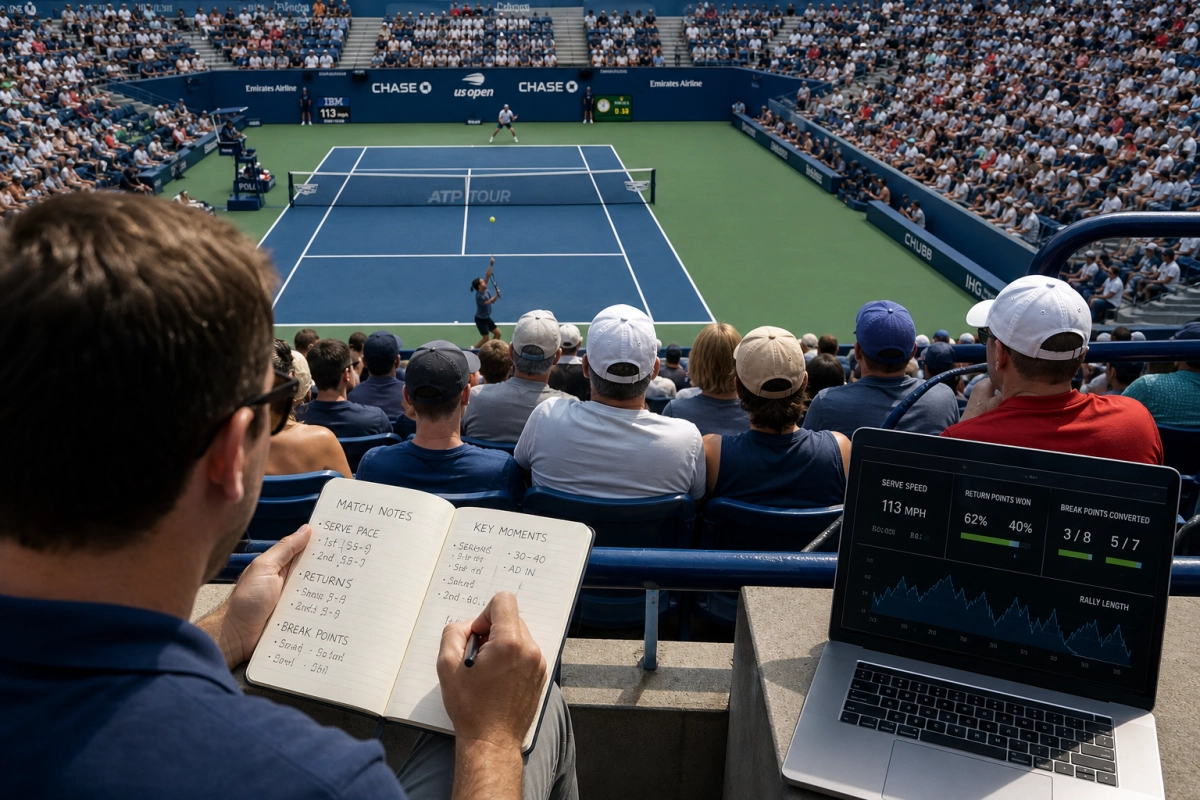
Tennis live betting: reading serve speed, returns and pressure in real time
Tennis live betting rewards structured observation. This guide shows how to spot meaningful signals — serve pace and accuracy, return performance, break-point pressure — and use those reads when markets shift during a match. It also explains core in-play markets, key terminology and simple risk controls so bettors can act quickly and responsibly.
How tennis in-play markets move and what each market means
Live odds reflect the market’s estimate of upcoming outcomes given current match events. Understanding why odds change helps you act fast and selectively.
- Next point / next game / next set: Short-term markets that react to serve quality, return positioning and momentum.
- Handicaps (games/sets): Virtual leads/deficits; useful when one player is likely to win by a margin despite close scores.
- Totals (over/under games, sets): Bet on match length; influenced by serve dominance, break frequency and fatigue.
- Tiebreak markets: Key when a set reaches 6–6 — tiebreak-specific skills often outweigh general form.
- Cash out: Mid-match exit price; convenient for damage limitation but usually poorer value than independent markets.
Key terms: live odds (current prices), in-play markets (bets available during the match), match momentum (observable runs that shift probabilities).
Reading serve pace and accuracy: simple checks that matter
Serve performance is the most immediate signal. Watch three things each service game:
- First-serve percentage: High first-serve% shortens service games and reduces break chance; a sudden drop opens value on return/next-game markets.
- Serve speed vs placement: Speed without depth or placement invites aggressive returns; if returns improve, expect markets to lengthen.
- Unforced errors on serve: Off-balance tosses, net cords or repeated wide serves indicate accuracy problems that can flip odds quickly.
Example: Player A increases serve speed but lands only 55% first serves and the opponent starts taking the ball early. The live market for the next game should reflect higher break probability — consider trimming a handicap or backing the return-heavy next-game market.
Return performance and break-point pressure: what to watch in the short term
Return reads often create the best in-play opportunities because breaks swing sets and odds. Focus on:
- Depth and aggression of returns: deep, early returns move the server off the T and create attackable points.
- Break-point creation vs conversion: many chances but low conversion suggests impending improvement or nervousness; small live stakes can exploit this if the trend looks set to change.
- Server behaviour under pressure: tentative serves, patterning wide on pressure, or rising double faults signal increased break chances.
Quick checklist before a next-point or next-game bet: current first-serve% (last 5 service points); return effectiveness this game; break-point frequency and body-language cues. Responsible staking: set a fixed bankroll, use a small flat stake per live bet (commonly 0.5–1% of bankroll), and avoid chasing losses. Act only when you see a clear observable edge.
Tiebreak dynamics: micro-skills that decide short formats
Tiebreaks are condensed tests of serve, return and nerve; odds move quickly since a mini-break dramatically alters probabilities. To read tiebreaks in-play, focus on:
- First-point serve/return: Winning the opening point often reflects superior serve placement or aggressive returning.
- Mini-break protection: Players who convert mini-breaks into follow-up points (steady first serves, low unforced errors) are likelier to close tiebreaks.
- Predictable patterns: Repeated serve/return patterns under pressure (wide on deuce, body on deciding points) create exploitable edges in next-point markets.
Practical tip: If a player has been winning short tiebreak exchanges by attacking second serves and the opponent’s second-serve% has slipped, the market often lags. A small stake on a tiebreak specialist can be justified at slightly inflated odds.
Momentum swings and physical/fatigue cues: read the undercurrent
Momentum is tangible: strings of aggressive returns, volleying surges or runs of unforced errors change probabilities before odds adjust. Combine these reads with physical cues to separate temporary bursts from genuine collapse.
- Short-term momentum: Count runs in points/games. A 4–0 or 5–0 run is significant; expect next-game markets to favour the run-maker unless physical signs contradict it.
- Physiological cues: Reduced serve speed, shorter backswing, slower recovery, heavier breathing, or limping indicate declining movement and higher break probability.
- Behavioral tells: Longer time between serves, prolonged towel breaks or visible frustration often presage fragmentation and more errors.
Example: Player B wins three return games but begins clipping serves and dropping first-serve%. The momentum is real but showing decay — take a small immediate bet on the next game or wait for the opponent’s serve trend to confirm a sustainable advantage.
Turning live reads into market selection and a simple staking plan
Translate your reads into market choices and disciplined stakes:
- Next point/game: Use for clear micro-edges (e.g., falling first-serve% + attacking return). Stakes should be small (0.5–1 unit) due to high variance.
- Handicaps: Deploy when one player shows sustained dominance over multiple games; prefer these for expected margin, not single-point swings.
- Totals: Back overs when holds are easy, unders when serve accuracy drops and rallies shorten. Use set-level totals if a tiebreak specialist is involved.
- Tiebreaks: Bet selectively when you’ve observed conversion strength or predictable serve patterns; size bets moderately (1–1.5 units).
Conservative staking plan:
- Define a bankroll and divide into 100–200 units.
- Unit size: 0.5–1% of bankroll for standard live bets; up to 1.5% for higher-confidence plays.
- Exposure cap: never have more than ~5% of bankroll active across simultaneous live bets.
- Loss control: stop after a set number of consecutive losing bets in a session (e.g., six) and reassess.
- Edge filter: act only when your read implies a clear edge vs bookmaker odds; if uncertain, skip.
Quick checklists and a short match-flow example
Live-bet checklist (5–10 seconds before you act)
- Serve: first-serve% (last 5 points) and sudden drops.
- Return: deep/aggresive returns and return winners this game.
- Pressure points: break points created/converted; server’s response under pressure.
- Tiebreak cues: who served first, mini-break history, serve patterns.
- Momentum & body language: run length, movement quality, visible fatigue.
- Market check: does the price reflect the shift? Only act if you see a qualitative edge.
- Staking discipline: planned unit size, exposure cap, stop condition.
Short match-flow example (how to apply the checklist)
Situation: Set 2 at 4–4. Player X serving; their first-serve% drops from ~70% to ~50% over two service games, Player Y is stepping in with deep returns, and Player X breathes heavier and takes extra time between points.
- Read: Increased break probability; momentum favours Player Y but fatigue signs mean the advantage may deepen or stabilize.
- Market choice: Back “next game – break” for Player Y (small stake) or take a set-handicap on Player Y if sustained return dominance is visible.
- Stake sizing: 0.5 units for high-variance next-game bets; 1 unit for higher-confidence handicaps.
- Execution: Act quickly, monitor the first few points. If first-serve% rebounds or rhythm returns, cut losses or accept the outcome and log the play for review.
Final guidance for steady live-betting progress
Treat live betting as a skill to build. Prioritize consistent observation, small repeatable stakes and honest record-keeping. Over time you’ll learn which cues are reliable and which are noise; prune criteria accordingly. When in doubt, sit out — the best live decision is often no action. Keep sessions short, respect stop conditions, and review plays objectively to turn occasional edges into disciplined, long-term progress.