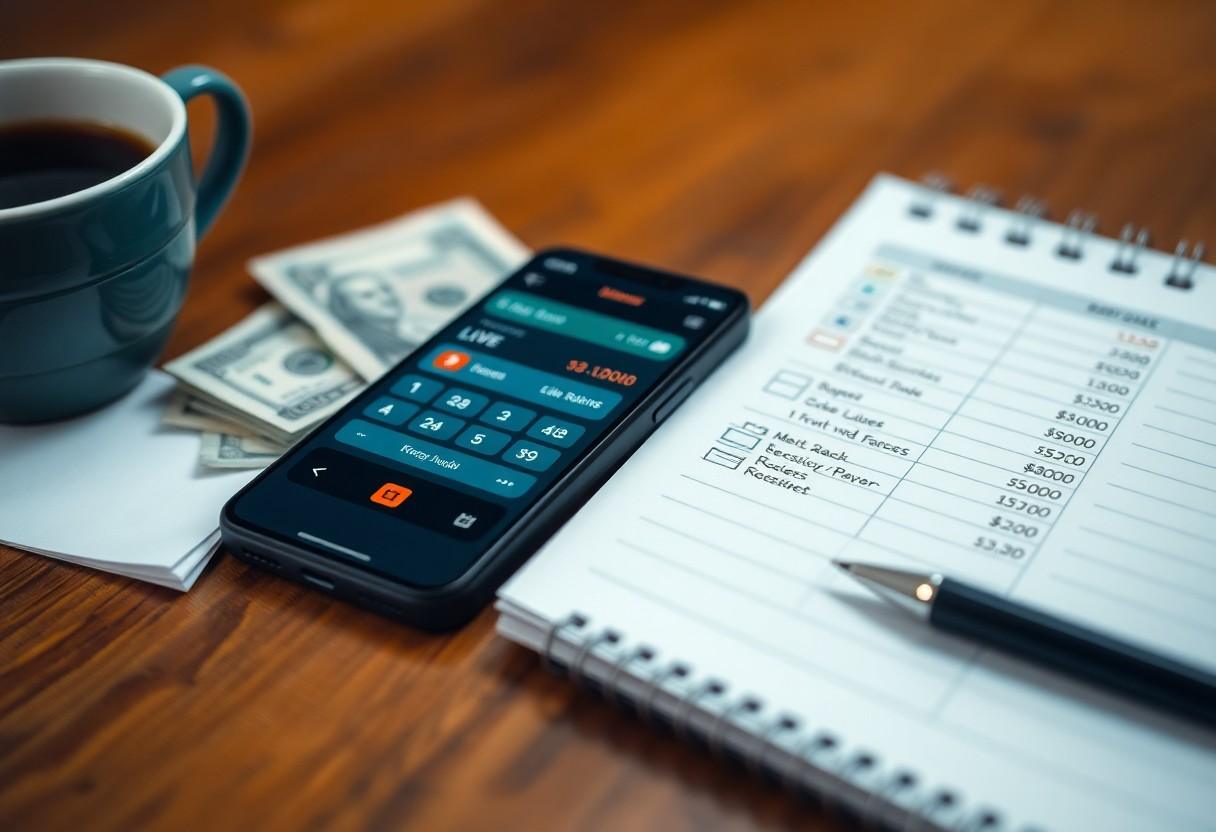

Why live cash-out is changing how you make in-play decisions
When you place a bet before or during a match, the option to cash out in real time gives you a way to lock in a portion of potential winnings or cut losses before an event finishes. This option shifts part of the decision-making from pre-game analysis to moment-to-moment judgment. You’ll no longer be committing solely to a fixed outcome; instead, you’ll weigh changing probability, available cash-out value, and your personal risk tolerance as the game unfolds.
Understanding the role cash-out plays in modern sportsbooks helps you avoid common pitfalls like selling too early out of fear or holding on too long hoping for a swing. In practice, cash-out can be used for three main purposes:
- Protecting an increased position when the market moves in your favor.
- Reducing losses on a bet that is slipping away.
- Managing bankroll volatility by converting an unpredictable open-ended exposure into a known outcome.
How live cash-out works and the factors that determine its value
At its core, a cash-out offer reflects the bookmaker’s real-time assessment of your bet’s expected value if the event continued under current conditions. The cash-out amount is typically slightly worse than the fair expected value because the bookmaker builds in a margin and hedging costs. You need to know what influences that number so you can judge whether to accept it.
Primary factors that affect cash-out offers
- Real-time probability: The more likely your original selection is to win (based on live play), the higher the cash-out.
- Time remaining: Shorter timeframes reduce uncertainty, often making cash-outs more attractive.
- Market liquidity and hedge cost: If the bookmaker must lay off risk in other markets, that cost can depress cash-out values.
- Bet type and multiplicity: Single bets are straightforward; multiples or complex bets (like accumulators) might show volatile cash-outs due to dependence on multiple outcomes.
- Latency and price updates: Delays in feed or your connection can make offers stale; a cash-out you see may already be outdated by play that just happened.
Common cash-out variants and what they mean for you
- Automatic cash-out: Pre-set thresholds that trigger acceptance—useful for emotion-free execution but requires careful setting.
- Partial cash-out: Lets you secure part of the stake/winnings while leaving the rest to run—good for balancing protection and upside.
- Cash-out with reverse options: Some platforms allow reconverting a cashed portion back into play; know the rules before using them.
Mastering cash-out requires both technical understanding of the numbers and practical rules for when you act. In the next section, you’ll learn step-by-step strategies for deciding when to accept, partially cash out, or ride a bet to completion, including example scenarios from popular sports.

A simple decision framework for in-play cash-out choices
When the clock is ticking and an offer flashes on your screen, a compact, repeatable framework keeps emotion out of the equation. Use these four checks in order—if any one pushes you toward cashing out, give it strong consideration.
- Check the math: Note your stake (S), the current cash-out offer (C) and the potential return if the selection wins (R). As a quick heuristic, the implied live win probability ≈ C / R. If that implied probability is materially higher than your estimate of the true chance of winning, the offer is attractive; if it’s lower, you’re getting a poor price.
- Time and volatility: Ask how much time remains and how fast swing events can happen. Late-game scenarios with little time left favor taking a fair cash-out; early in play or in high-volatility contexts (e.g., many scoring opportunities remain) favor patience or partial cash-out.
- Opportunity cost and alternative bets: Would cashing out free up bankroll to place a higher-expected-value live wager elsewhere? If yes, converting an underpriced position into a new, better value play can be the optimal move.
- Bankroll and utility fit: Match the offer to your risk profile. If a cash-out reduces exposure to a loss you cannot tolerate, it’s worth accepting even if the EV is slightly negative relative to hold. Conversely, if you’re banking for long-term ROI and the offer is close to fair EV, lean toward holding.
Combine these checks into a simple rule-of-thumb: accept a cash-out if (1) implied probability > your subjective probability by a clear margin, (2) little time remains, or (3) the payout materially improves bankroll flexibility. Use partial cash-out when you want downside protection but still want to capture upside—typically cashed portion between 30–70% depending on how confident you are.
Practical examples from soccer, basketball, and tennis
Concrete scenarios help translate rules into action. Below are three common in-play situations and how the framework guides a decision.
- Soccer — away team underdog leading at 75’: You staked $50 at 4.0 (R = $200). At 75’, cash-out offered C = $110. Implied probability ≈ 110/200 = 55%. If you judge the true chance of the underdog holding at 65% because the home side is pressing but lacking quality, the offer is good value—accept or take a partial cash-out (e.g., 60%) to lock profit and keep a smaller position for a potential late turn.
- Basketball — first-half futures swung your accumulator: You have a $20 single on Team A to win outright; mid-game they lead comfortably and cash-out is $30 (R = $60). Implied probability = 30/60 = 50%. With lots of minutes left, small-run swings are possible; if you’re content preserving bankroll volatility, consider a 50% partial cash-out to lock a small profit and retain upside exposure.
- Tennis — player serving at break point: You bet $100 on Player X at 2.5 (R = $250). Opponent is up break point; immediate cash-out drops to $90. Implied probability ≈ 90/250 = 36%. If you estimate Player X’s probability of surviving the point and holding serve then winning the match at >40%, fold the cash-out (decline). If you’re risk-averse or the match is physically draining, a partial cash-out to salvage $40–60 preserves bankroll and limits stress.
These examples show the same principles applied across sports: calculate implied probability quickly, weigh time/volatility, and decide with your bankroll goals in mind. Practice these scenarios in small stakes until the decision process becomes second nature.

Putting the approach into action
Mastering live cash-out is less about memorizing rules and more about developing disciplined habits: test decisions at low stakes, keep a short log of cash-outs accepted versus declined, and refine your subjective probabilities over time. Use partial and automatic cash-outs selectively to control emotion, but always verify platform rules and update settings to match your bankroll plan. Remember that speed matters—latency and market movement can change an offer in seconds—so optimize your connection and be familiar with how your bookmaker displays live prices. If you want a refresher on the math that underpins these decisions, see expected value explained.
Frequently Asked Questions
When should I accept a live cash-out offer?
Accept when the implied probability derived from the offer clearly exceeds your own estimate of the true probability, when little time remains and volatility is low, or when freeing bankroll enables a higher-expected-value opportunity elsewhere. Use partial cash-outs to balance protection and upside if you’re unsure.
How do partial and automatic cash-outs affect long-term results?
Partial cash-outs let you lock some profit while retaining exposure; they can smooth variance without fully sacrificing upside. Automatic cash-outs remove emotion by executing preset thresholds, which is useful if you consistently deviate from your strategy—but preset levels should be chosen based on your risk tolerance and EV targets to avoid frequent suboptimal executions.
Are cash-out offers always fair, and can I rely on them?
Cash-out offers reflect the bookmaker’s live expected value minus margin and hedging costs, so they are typically slightly worse than the true fair price. Factors like latency, market liquidity, and complex bet structures can further bias offers. Treat cash-outs as a liquidity and risk-management tool rather than a constantly fair market price—compare the implied probability to your estimate before acting.