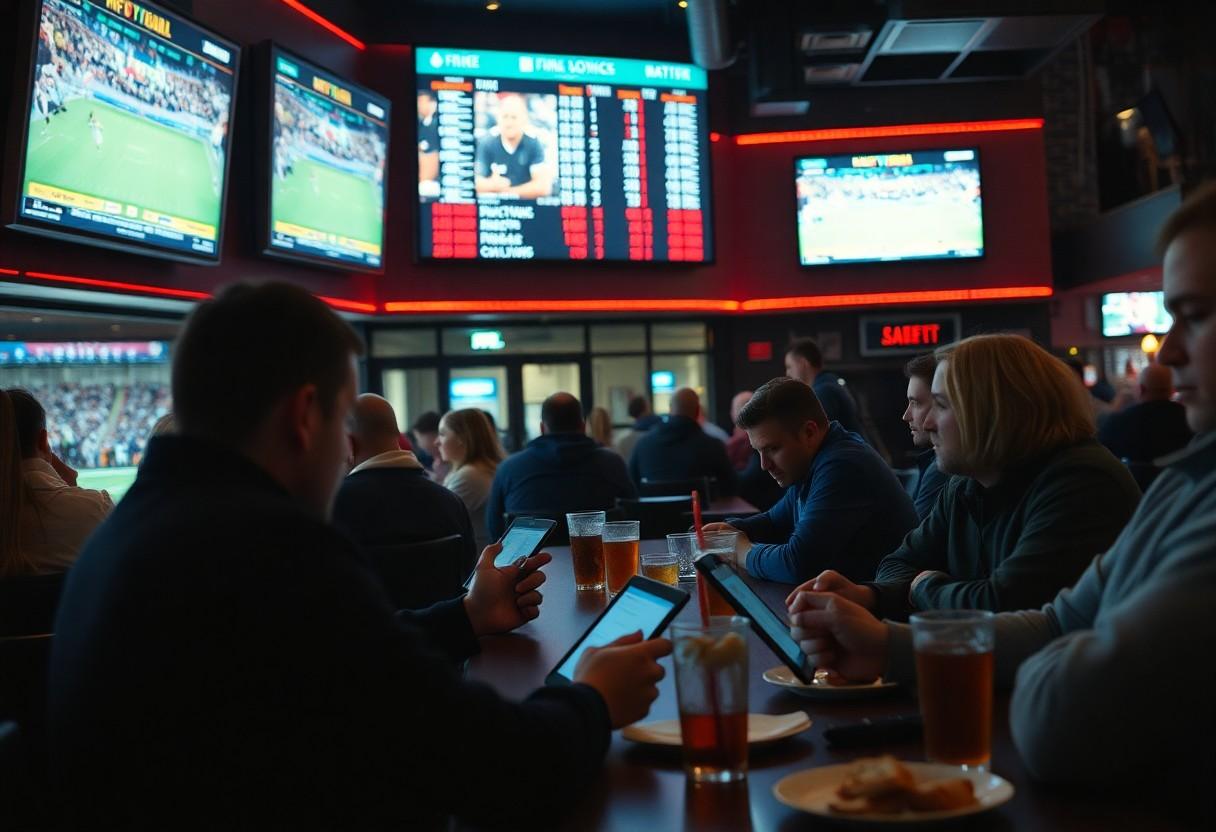

Why live betting is reshaping how you wager
Live or in-play betting turns sports from a pre-match proposition into a constantly shifting marketplace. Instead of placing a single, static bet before kickoff, you react to events as they unfold: momentum swings, injuries, tactical changes and referee decisions all reprice the odds in real time. When you understand how those live odds are formed and what drives short-term price moves, you gain opportunities that don’t exist in pre-match markets.
In this article’s first part you’ll learn how live odds are produced, what factors make them move, and the core tools you should have open before placing an in-play wager. Treat this as your foundation—without it you’ll be guessing rather than trading.
How live odds are generated and what they actually mean
Bookmakers and betting exchanges continuously recalculate probabilities based on incoming information. Internally, a live price represents an implied probability — the bookmaker’s estimate of an outcome plus margin — updated to reflect the latest events. Key components in that calculation include:
- Event state: current score, time remaining, possession, and location (e.g., corner areas in soccer).
- Real-time statistics: shots, expected goals (xG), territory, turnovers and other feedable metrics.
- Market exposure: how much money is matched on each outcome and where the book wants to balance risk.
- Latency correction: feeds and traders adjust for transmission delays so odds reflect what’s happening now, not ten seconds ago.
For you, the important takeaway is that odds are not mystical — they’re numeric reflections of probability and liquidity. If you can read the event state and the market’s reaction, you can spot when odds are temporarily inefficient.
Common triggers that move in-play prices and what to watch for
Live markets are noisy; not every movement equals a profitable edge. Focus on the triggers that consistently create meaningful price dislocations:
- Major game events: goals, red cards, substitutions, and injuries produce the biggest repricing.
- Momentum and statistical dominance: a team dominating territory and shots may not score immediately but will shorten odds as bookmakers price in expected future outcomes.
- Liquidity flows: large matched bets early in a move can accelerate odds shifts—watch both sides of the market to gauge conviction.
- Feed and latency issues: slower data or delayed pricing on some platforms can create arbitrage windows, but they’re risky and often closed quickly.
Before placing an in-play wager you should have reliable live data, a plan for bankroll and stake size, and clarity on whether you’re trading for small edges or backing longer-term outcomes.
Now that you can read how live odds are set and which events typically move markets, the next part will show practical in-play strategies, staking plans, and how to execute trades to tilt the odds in your favor.

Practical in-play strategies that consistently work
Once you can read the drivers of live prices, apply strategies that fit your risk tolerance and tech setup. Here are approaches used by sharp in-play bettors and traders, with simple rules to follow rather than wishful thinking.
- Scalp momentum: target short-lived imbalances during periods of pressure. Example: a team dominates shots and territory for 5–10 minutes but hasn’t scored; back them at inflated odds and cash out (or lay) once the market shortens. Rule of thumb: keep stake size small (see staking below) and aim for quick 3–8% bankroll gains per scalp rather than waiting for big outcomes.
- Event-triggered value backs: after a major event (red card, late substitution, injury) reassess probability immediately. If the market overreacts to an event you believe has limited impact, take the contrarian side. For instance, if a defensive substitution leads to outsized shortening of odds despite little change in xG or territory, that can be value to lay.
- Lay-the-draw / reverse trading: in low-scoring sports like soccer, the draw price is very sensitive to shots and corners. Lay the draw when the match shows consistent attacking intent from one side and the draw price shortens disproportionately—then back the draw later if the pace evens out.
- Hedge and lock profits on exchanges: use a back-then-lay or lay-then-back sequence to guarantee profit. Example: back Team A at 2.50 for $40; later the odds drop to 1.80—lay an appropriate stake to remove exposure and lock in a gain. Always account for commission when calculating hedge sizes.
Staking, risk controls and bankroll rules for live traders
Live markets are higher variance than pre-match bets; your staking must be more conservative and more dynamic.
- Fractional Kelly for live bets: full Kelly is too aggressive. Use 1–10% of Kelly depending on your confidence and liquidity; practical live ranges are 0.5–2% of bankroll per scalp and 1–3% for higher-conviction event bets.
- Maximum exposure caps: set a per-event exposure limit (e.g., no more than 5–10% of bankroll on a single match across all positions) and a per-market maximum (e.g., 2% per trade). This prevents a single volatility spike from wrecking your account.
- Stop-loss and profit targets: commit to a stop-loss (for example, 3–8% of bankroll for a single live trade) and a take-profit threshold. For scalps, a fixed percentage exit (e.g., +4% profit or −3% loss) reduces emotional decisions and keeps drawdowns manageable.
- Adjust for liquidity: in thin markets, reduce stakes further because slippage and unmatched orders turn theoretical edges into losses. If the market depth is small, treat your opportunity like a higher-risk bet.
Execution tools and operational best practices
Good strategy fails without clean execution. Professional in-play traders optimize tools and workflow so reaction time and sizing are consistent.
- Use an exchange with a ladder interface and hotkeys: placing and cancelling orders quickly is essential. Practice scenarios in a small account until muscle memory replaces panic.
- Multiple data feeds and latency checks: subscribe to the fastest feed you can afford and periodically test latency. Know which bookmaker or exchange is fastest for a sport and swap if you see consistent delay.
- Pre-built templates and alerts: have stake templates and alert rules for the situations you trade (e.g., “red card” or “xG > 0.3 in 10 minutes”). That prevents decision paralysis mid-game.
- Avoid feed/arb traps: arbitrage windows created by delayed feeds are tempting but often collapse due to quick corrections or platform restrictions—only experienced traders with ultra-low latency should attempt them.
With disciplined strategy selection, conservative staking and clean execution, live wagering becomes a repeatable skill rather than a guessing game. The final part will detail advanced trade management and how to scale your approach as your edge proves profitable.

Moving forward with in-play betting
Treat live wagering as a craft you develop over time: consistent routines, deliberate practice and disciplined sizing will matter far more than the occasional lucky strike. Build simple checklists (data feed, stake template, stop-loss), keep trades small while you learn, and review every session objectively—both winners and losers teach you what to refine. Use demo or low-stakes environments to internalize execution under pressure before increasing exposure, and lean on reputable resources when you want to deepen your understanding, for example Pinnacle.
Finally, protect your mental and financial health: set clear bankroll rules, take breaks after losing streaks, and use responsible-gambling tools if volatility becomes stressful. Live markets reward discipline and repetition; focus on process, not the next result.
Frequently Asked Questions
How much of my bankroll should I risk on a single live trade?
Live trades are higher variance than pre-match bets, so apply conservative sizing. Practical ranges are often 0.5–2% for short scalp trades and 1–3% for higher-conviction event bets. Also set per-event caps (for example no more than 5–10% of bankroll across all positions in one match) to avoid outsized exposure.
Which execution tools make the biggest difference for in-play trading?
Speed and control are key: a betting exchange with a ladder interface and customizable hotkeys, a reliable low-latency data feed, stake templates and automated alerts are the most impactful. Practicing with your exact setup reduces execution errors when markets move quickly.
Can a beginner realistically turn a profit with live wagering?
Yes, but it takes time and focused work. Beginners should start with small stakes, use demo or low-risk environments, learn to read event flow and market reactions, keep a trading journal, and prioritize risk management. Avoid chasing quick wins and risky arbitrage unless you have the technical setup and experience to manage latency and slippage.