
Why World Cup betting odds matter and what they tell you
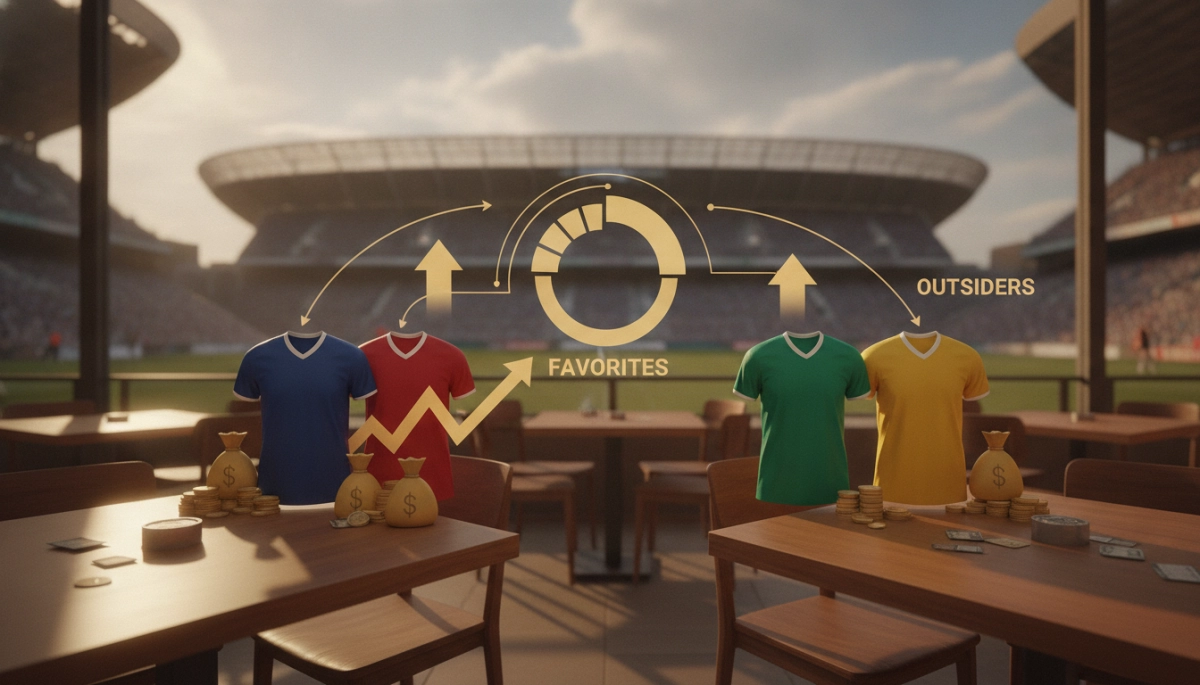
You follow the World Cup for the drama, the upsets, and the chance to back a winning team. Betting odds are the shorthand the market uses to express those chances. When you see a team listed as a “favorite” or an “outsider,” you’re looking at the market’s estimate of their probability to win a match, a group, or the whole tournament. Learning how to read those numbers helps you make smarter choices, spot value, and understand why bookmakers move lines as the tournament unfolds.
How favorites and outsiders are reflected in the numbers
Favorites have lower odds because markets assign them a higher probability of winning. Outsiders (or longshots) carry higher odds because their chances are perceived as slim. For example, a heavy favorite might be priced at 1.50 in decimal odds (you’d win $0.50 for every $1 staked), while an outsider might be 10.00 (you’d win $9 for every $1 staked). The gap between those prices communicates the market’s expectation and the perceived gap in quality between teams.
- Favorites: lower payout, higher implied probability, more market confidence.
- Outsiders: higher payout, lower implied probability, potential for big returns.
- Shifts in odds: reflect new information—injuries, lineups, betting volume, or tactical matchups.
Common odds formats and what they mean for your bets
Bookmakers present odds in three main formats—decimal, fractional, and American—and you should be comfortable with each because different sportsbooks and regions prefer different formats. Decimal odds are straightforward: multiply your stake by the decimal to get total return. Fractional odds show profit relative to stake (e.g., 5/1 means five units won per one unit staked). American (moneyline) odds use positive and negative numbers to indicate underdogs and favorites (e.g., -200 means you must bet $200 to win $100; +300 means $100 wins $300).
Translating odds into implied probability
Understanding implied probability is one of the most practical skills you can learn. Convert odds into a percentage to see the market’s estimated chance of an outcome. For decimal odds, implied probability = 1 / decimal odds. So 2.00 decimal equals a 50% implied probability. Comparing implied probability to your own estimate of a result helps you spot “value”—situations where the market underestimates a team’s real chances.
- Use implied probability to compare players, teams, and markets directly.
- Remember the bookmaker margin: total implied probabilities often add to more than 100%.
- Adjust for margin when assessing whether a line actually offers value.
Now that you can recognize favorites and outsiders and translate odds into probability, the next part will show how bookmakers build those prices and how market forces, team news, and betting patterns push odds up or down during the World Cup.
How bookmakers construct World Cup prices
Bookmakers don’t pull numbers from thin air. They combine statistical models, expert input, and commercial considerations to create an opening price that reflects their best estimate of outcomes while protecting their book. For World Cup markets this process often starts months in advance with model projections that incorporate: team Elo or FIFA rankings, recent form, head-to-head history, goal expectancy (xG), player availability, and even travel or climate factors.
Those model outputs are converted into implied probabilities, then adjusted to include the bookmaker’s margin (the “vig”) so the total exceeds 100%. Early lines are typically conservative—bookmakers are wary of sharp bettors and set limits to manage liability. For popular teams and markets they’ll also look at liquidity: how much money they can accept without risking big exposure. Large sportsbooks have traders who tweak prices to balance action across outcomes rather than simply reflect pure probability.
- Model inputs: ratings, xG, squad depth, coach tactics, set-piece strength.
- Commercial adjustments: margin, betting limits, market depth for star teams.
- Human overlay: traders reduce risk by tempering extreme model outputs and factoring in intangible elements like tournament motivation.
How team news and market behavior push odds during the tournament
Odds are dynamic. A single injury, starting XI leak, or tactical revelation can shift markets within minutes. Bookmakers respond to hard information (confirmed squad lists, injuries, suspensions) by updating probabilities. They also react to where money comes from: if a large, early bet lands on a specific outcome, traders may shorten that price to balance their books and discourage further one-sided exposure.
Two types of market activity matter most:
- Public money: casual bettors tend to back favorites and popular teams. Heavy public betting can compress favorites’ prices early, especially in nations with large fanbases.
- Sharp money: professional bettors use sophisticated models and seek value. When several sharp bets hit the same line, bookmakers assume the underlying probability is mispriced and move quickly—sometimes closing markets or imposing limits.
Live betting amplifies these effects. In-play markets react to game states (red cards, injuries, momentum swings) and can offer short windows of value for attentive bettors—but they also widen spreads and increase the bookmaker’s edge due to faster decision-making and latency.
Reading line movement: what big swings really mean
Not every large move indicates a change in a team’s true chances. Context is crucial. A pronounced shortening of odds can mean:
- Confirmed team news favoring one side (a key player returns).
- Heavy public or sharp money skewing the book.
- Market correction where earlier lines were poor estimates.
Conversely, a sudden lengthening of a favorite can signal alarming internal issues (injuries, unrest) or a strategic push by bookmakers to reduce liability after lopsided bets. To interpret moves, check timing and source—late-night price shifts before kickoff after a lineup leak carry different weight than gradual shifts over weeks due to accumulating bets.
By understanding how models, traders, and bettors interact, you’ll be better equipped to tell meaningful price changes from noise—and to identify where genuine value might appear during the World Cup.
Putting odds to work: practical tips and responsible play
Practical checklist for tournament betting
- Shop for the best price—small differences in odds compound over multiple bets, so compare sportsbooks before staking.
- Convert odds to implied probability and compare with your own estimate; only bet when you find value beyond the bookmaker’s margin.
- Manage bankroll with fixed units and avoid upping stakes after a loss; preserving capital is more important than chasing a big score.
- Monitor team news and time bets—early markets offer lines based on models, while last-minute moves reflect hard information; choose which suits your strategy.
- Pay attention to market signals: gradual moves may indicate widespread public action, while sharp, rapid adjustments often follow professional bets or confirmed information.
- Be cautious with in-play betting: the speed of markets increases risk and makes value windows short and demanding.
Responsible gambling and useful resources
Betting should be entertaining, not a financial strategy. Set deposit and loss limits, take breaks, and never stake money you can’t afford to lose. If you or someone you know needs support, resources such as BeGambleAware provide guidance and help lines in many countries.
Approach World Cup odds with curiosity and discipline: use them to inform decisions, not to replace judgment, and allow patience to be your biggest advantage across a long tournament.