Live basketball betting: how in-play markets and momentum change prices
Live basketball betting gives sports fans a chance to react to what actually happens on the court. This guide explains the main in-play markets, defines live odds, and shows how events such as scoring runs, fouls, timeouts and substitutions alter prices. It is written for both beginners who need clear definitions and experienced bettors seeking practical, timed tactics. Throughout, the focus is on fast but rational decision-making and strict bankroll control.
Core in-play markets every bettor should understand
Before placing a live bet it helps to know what each market represents and how bookmakers adjust odds mid-game.
What “live odds” and cash-out mean
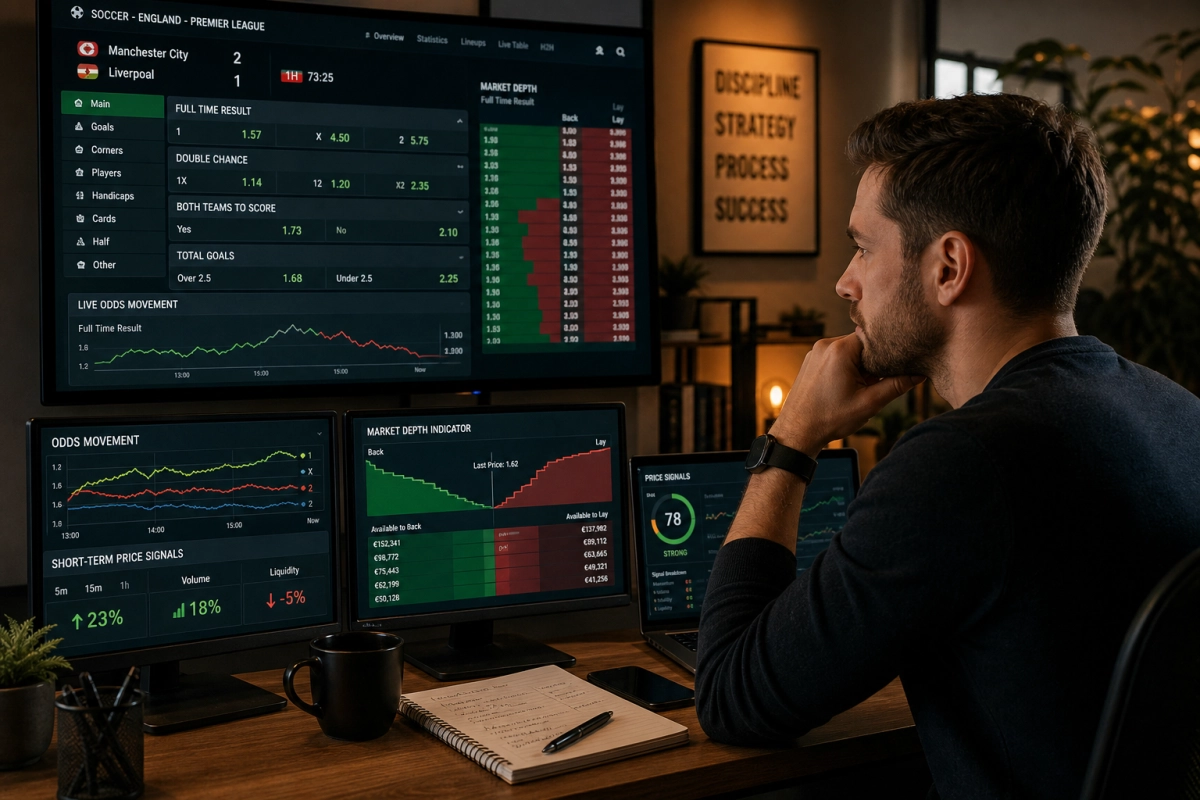
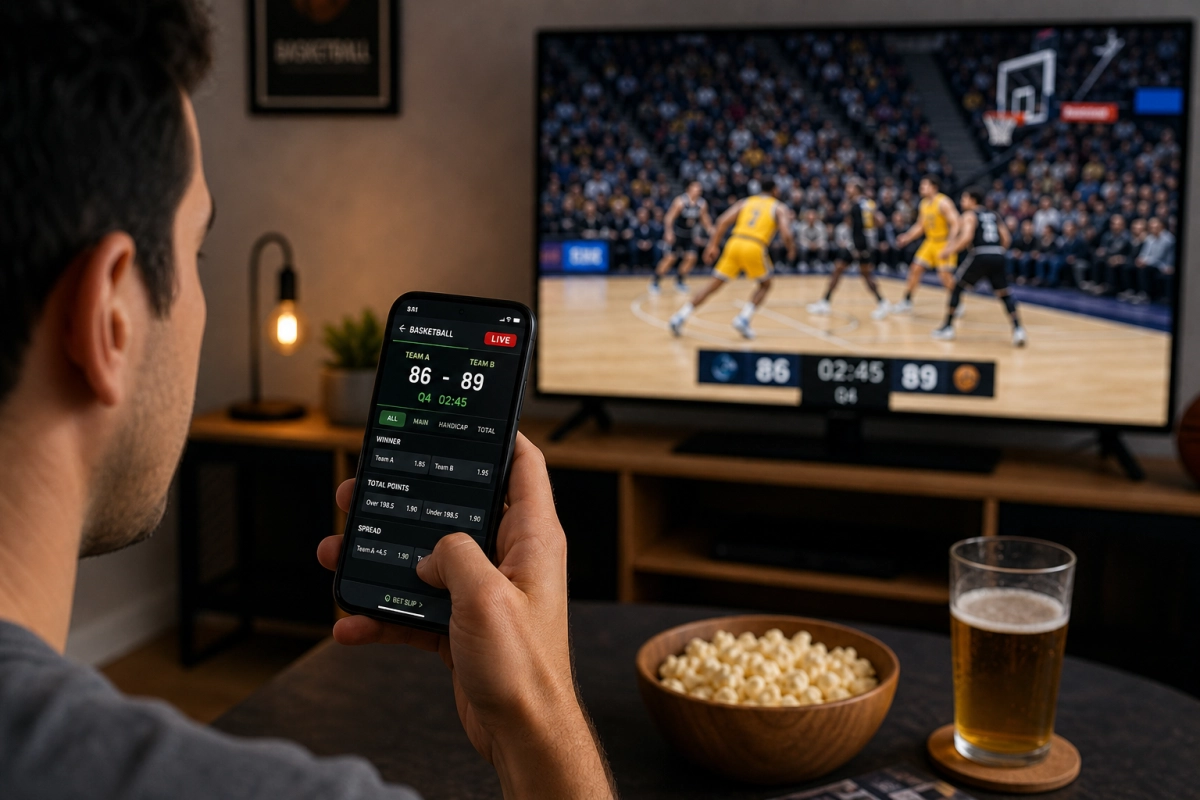
Live odds are the real-time prices bookmakers offer during a match. They change continuously as the match state evolves and as money flows in. Cash-out is a feature that lets bettors settle a live bet early at a price offered by the bookmaker; it can lock a profit or reduce a loss but may not represent full fair value.
Common basketball in-play markets
- Moneyline (live winner): Bet on which team wins the match. Odds tighten for the team that gains momentum and lengthen for the one that falls behind.
- Spread / Handicap: A point margin applied to a team (e.g., -6.5). Live spreads move with scoring runs and clock management.
- Totals (over/under): Market on total points scored. Pace changes, foul trouble and bench-heavy lineups shift totals pricing.
- Next score / next basket: Short market for who scores the next basket or whether the next score is a two or three. Odds are volatile and often reflect team possession and matchup at the time.
- Player props: Live markets on individual stats (points, rebounds, assists). Substitutions, fouls and rotations have immediate impact on these prices.
Which in-game events move live basketball odds—and why
Understanding the cause-and-effect between game events and odds helps bettors act quickly and sensibly.
Scoring runs and momentum
A 10–0 run changes perception: bookmakers shorten the favored team’s live moneyline and may increase the opponent’s spread. Momentum matters because it often reflects both tactical shifts and confidence—both priced by markets.
Fouls, timeouts and rotations
- Foul trouble: If a key player picks up quick fouls, their minutes and shot attempts drop; player props and team totals adjust downwards.
- Timeouts: Coaches use timeouts to stop momentum—markets often pause briefly, then reprice based on lineup after the stoppage.
- Substitutions and rotations: A bench-heavy lineup after an injury or planned rest can lower a team’s offensive ceiling and shift totals and spreads.
Realistic in-play observation—watch possession, matchup advantages, bench quality and coach behavior—matters more than reacting to score alone. Bettors must also stick to bankroll limits, set stakes before the match, and avoid chasing losses.
Next, the guide will provide quarter-by-quarter timing tactics, specific examples of how to exploit short-lived edges, and rules for betting in clutch situations.
Quarter-by-quarter tactics: where to attack the market
Live betting is as much about timing as it is about reading the game. Divide the match into phases and assign preferred markets and stake sizes to each—this prevents emotional, last-second decisions.
– Opening minutes (tip-off to ~3:00 of quarter): chaos and rotation-heavy lineups make totals and full-game spreads noisy. Target short markets only: next-score/next-basket, quick player-props for bench players who get the start, or very small-size ML bets when you have clear information on starting lineups. Typical stake: 0.5–1% of bankroll on high-variance short markets.
– Mid-quarter (about 3:00–8:00): pace settles, starters log consistent minutes. This is the best window for exploiting mispriced spreads and totals. If either team shows a deliberate offensive set or defensive mismatch, apply 1–2% stakes on live spreads or quarter totals. Ladder stakes across several minutes rather than a single large bet.
– End-of-quarter (last 2:00): clocks and fouling strategies dominate. Defenses tighten; totals tend to compress. Quarter totals and team totals for the remaining time become more predictable—reduce stakes unless you have a clear structural edge (e.g., opponent intentionally fouling). Typical stake: 0.5–1.5%.
– Halftime to start of third: look for adjustments. Coaches usually change rotations—monitor who is subbed in first after break. If bench-heavy lineups appear, the total for the quarter may dip immediately; act quickly with 1% size on totals or player props.
– Fourth quarter/closing stretch: markets move fastest and odds are tight. Favor small, well-reasoned plays (1% or less) on ML or player free-throw props when you can read the substitution/foul plan. Avoid large speculative bets unless the opposing coach’s strategy is obvious.
Always pre-set max stake per market and a maximum number of concurrent live bets—this preserves bankroll during volatile sequences.
How to exploit short-lived edges: concrete timed plays
Short-lived edges arise from observable events that bookmakers price imperfectly in the immediate aftermath. Here are specific, repeatable plays and the clock windows to act.
– After a timeout that follows a scoring run (timeout called by the team on the receiving end): wait 10–20 seconds for the first post-timeout lineup and possession to be set. If the coach brings in a defensive specialist but leaves the primary scorer on the bench, bet the opponent’s quarter spread or next-score at small size—bookmakers often reprice too quickly for momentum but not for rotation nuance.
– When a star picks up a fourth foul with more than 4:00 left in a half: bet reduced player props (points/rebounds) for that player and consider laying off team totals by ~0.5–1 point. The market takes a beat to reflect reduced minute probability.
– After an injury timeout with a short-term lineup shift: immediate next-score and short player props react slowly. If a team’s primary ball-handler is out for a few possessions, take the under on that team’s quarter total for the next 3–6 minutes.
– Possession-confirmed next-score: when TV/coach gives a clear offensive set and the primary closer is on the floor, back a specific next-score (two or three) within the first 5 seconds of inbound. Small stakes only—these are high variance but high edge when possession is obvious.
Document each play in a tracker (market, event, time, stake, result) to find which timed tactics suit your reading of particular teams.
Clutch moments and final-minute rules
The final two minutes are a different market—bookmakers have more data and liquidity, but human coaching patterns give edges if you watch substitutions and foul intent.
– Last 2:00 rules: reduce stake sizes (0.5–1%), favour markets you can read (who’s handling the ball, who can be fouled). Avoid full-game spread blows unless you can see forced fouling or a clear mismatch on court.
– Intentional-foul scenarios: if a trailing team starts fouling to stop the clock, totals often drop into a free-throw driven market. Bet the over on opponent free-throw makes or on player FT props for the shooter; stake modestly since outcomes are binary.
– Single-possession closes (last 15–30 seconds): only act on confirmed possession and on players known as closers. Do not chase multiple possessions. If cash-out is available and offers >70–75% of potential win, consider taking it to lock profit—especially in volatile, opponent-foul situations.
Above all, maintain pre-set rules for maximum exposure in closing minutes and never increase stake percentages out of emotion. Clutch betting rewards discipline as much as game reading.
Putting the plan into practice
Live betting is a skill built on preparation, disciplined execution and ongoing review. Start small, trade your edge consistently, and treat each live session as a learning exercise rather than a quick route to wins. The faster you can read lineups, coach intent and possession, the more repeatable your edges become—so prioritize practice and process over short-term outcomes.
Pre-live checklist
- Confirm starting lineups and any last-second scratches before tip-off.
- Set bankroll limits and maximum stake percentages per market and per quarter.
- Open a fast, reliable stream and a separate, up-to-date odds feed for the book you’ll use.
- Have a simple bet tracker ready (market, event, time, stake, rationale, result).
- Predefine rules for cash-out, max concurrent bets, and stall situations (injury/timeouts).
How to stay disciplined during play
- Follow your stake plan—reduce size in volatile closing minutes and when uncertain.
- Avoid chasing losses: if you go on tilt, stop and review rather than escalate stakes.
- Record qualitative notes (rotations, coach decisions, foul patterns) to refine tactics.
- Review sessions weekly: track ROI by market, by team, and by timed tactic to find strengths.
- Adjust strategies for different leagues and teams; what works in one matchup may fail in another.
Approach live betting like any live skill: prepare, execute the plan, record what happened, and iterate. With modest stakes, clear rules and a focus on incremental improvement, you can convert short-lived in-play opportunities into a repeatable, disciplined approach that rewards good reading of the game more than impulsive risk-taking.