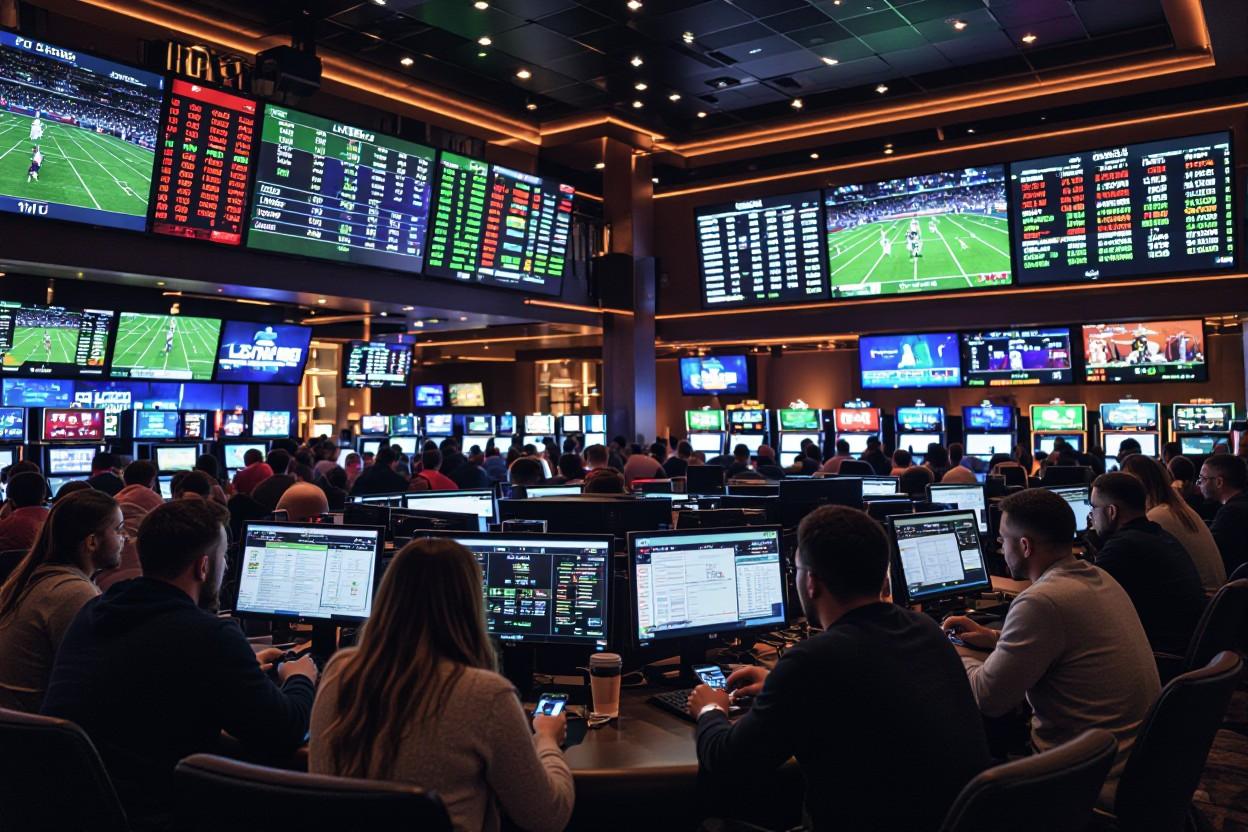

Why in-play betting rewards quick thinking and observation
When you bet in-play, you trade fixed pre-match predictions for a constantly shifting market. Live odds respond immediately to events — goals, injuries, substitutions, momentum swings, and referee decisions — which creates opportunities if you know what to look for. You’ll need to read price movement, distinguish temporary noise from real value, and act with discipline. Mastering these skills turns reactive betting into a strategic advantage rather than gambling on luck.
Think of live betting as a sequence of small decisions. Each change in odds is information: bookmakers are updating probabilities based on new data, public money, and automated models. Your job is to extract actionable insight from that information faster or more accurately than the market.
How live odds move and what those shifts mean for your bets
Understanding why odds change helps you find value. Here are common drivers of live-odds movement:
- Match events: A goal, red card, or near-miss immediately affects win probabilities. Odds tighten for the team that benefits and lengthen for the disadvantaged side.
- Momentum and pressure: Sustained attacking pressure or consecutive corners often leads bookmakers to shorten odds for an imminent score, even before a shot finds the net.
- Market liquidity and public sentiment: Heavy betting on one outcome can move prices regardless of the true probability, creating potential value on the opposite side.
- Information asymmetry: In lower leagues or niche sports, you might have access to live commentary, player conditions, or tactical awareness not immediately priced in by the market.
To use these movements, focus on two questions for every live opportunity: “Is the odds change justified by a genuine event?” and “Is the new price offering value compared to the underlying probability I estimate?” If the answer to the second is yes, you’ve found a potentially profitable in-play bet.
Simple in-play tactics you can apply immediately
Start with scalable, low-complexity tactics so you can learn without taking large risks. Use these routines to sharpen your instincts:
- Wait for clarity: Avoid betting in the chaotic first few minutes of a match when lines are volatile and insufficient information is available.
- Back or lay momentum: If a team has several high-quality chances and the market hasn’t fully adjusted, back them while odds are still generous. Conversely, if the price has shortened dramatically on limited evidence, consider laying the market or looking for hedge opportunities.
- Use micro-stakes for pattern recognition: Track how odds react to specific triggers (e.g., a late corner sequence) so you learn which signals are predictive for that league or market.
- Protect your bankroll with quick sizing rules: Reduce stake size when betting into heavy uncertainty; increase slightly when you have strong situational edge that you can quantify.
These tactics are the foundation you’ll expand with market-specific strategies, timing techniques, and risk controls in the next section where we break down market selection and precise entry rules for different sports and bet types.

Choosing the right in-play markets: where value most often appears
Not all live markets are equally exploitable. Pick markets that (a) move on observable, modelable signals, (b) have enough liquidity to execute quickly, and (c) aren’t dominated by fast-moving public money. Here are practical categories to prioritize:
- Next-goal / next-event markets: These react to immediate momentum and are ideal for short, information-driven plays. They’re predictable when a team sustains pressure or faces a numerical disadvantage. Because decisions resolve quickly, you can make many small, low-variance trades.
- Totals (Over/Under) and goal-line shifts: Look for sustained sequences of shots, corners, or defensive changes that justify re-evaluating scoring probability. Totals are less binary than match-winner markets and often offer granular entry points as lines move by 0.5 or 1 goal.
- Card and booking markets: Useful in leagues or matches refereed tightly. If a referee starts citing fingers or a player is repeatedly targeted, the market often lags the actual booking probability, creating value.
- Market-implied reaction markets (cash-out/exchange lays): On betting exchanges you can lay positions to capture overreactions; with bookmaker cash-outs you can use partial closures when the implied value swings beyond your threshold.
Avoid markets that are highly correlated with public sentiment where books react instantly (major international matches, heavily televised fixtures) unless you have superior data or faster feeds. Lower-tier leagues and niche competitions are often slower to price and therefore richer in opportunity — but balance that against data quality and streaming delays.
Entry and exit rules: concrete triggers, sizing, and trade management
Turn intuition into a repeatable system by codifying exact triggers and sizing. Rules reduce emotional errors and let you act decisively when odds move.
- Define your edge threshold: Only place a bet when your estimated probability exceeds the implied probability by a clear margin. A sensible starting rule: require at least a 5 percentage-point edge (after adjusting for vig) before committing. If you use models, calibrate this threshold against historical strike rates.
- Time-based windows: Use different rules by game phase. Example: avoid the first 7–10 minutes; treat 10–25 minutes as a pattern-discovery window where stakes are small; increase stake modestly in the 60–80 minute window if you have a clear edge (teams tire and substitutions create exploitable dynamics).
- Sizing rules: Prefer fixed percentage staking with caps. A practical rule: 0.5–1% of bankroll for standard in-play bets, 0.2–0.5% for high uncertainty, and up to 1.5–2% when your model signals a strong, well-quantified edge. If you use Kelly, apply a conservative fraction (e.g., one-quarter Kelly).
- Exit plans and hedging: Predefine your profit targets and maximum acceptable loss. For exchange trades, consider scalping: set a tiny tick-profit target and lay/back partially to lock gains. For bookmaker bets, use cash-out only if it secures a positive expected value relative to your updated estimate.
- Operational hygiene: Prepare hotkeys, stable streams, and pre-built bet slips. Limit simultaneous open positions (e.g., no more than three matches at once). Set a strict stop-loss per match or session to avoid emotional chasing.
These rules make in-play betting a disciplined activity rather than a series of impulses. In the next part we’ll apply these principles to specific sports — football, tennis, and basketball — with precise entry examples and sample staking plans.

Sport-specific examples: applying the rules in real time
Football
Use next-goal and short-term totals when one team sustains pressure. Practical entry: after a sequence of 3–4 corners inside 10 minutes with a clear attacking pattern, back the attacking team for the next goal with 0.5% of bankroll (increase to 1% only when you’ve repeatedly observed the pattern’s predictive value). Exit by hedging on the exchange or accepting a small cash-out if the implied probability on the market exceeds your edge threshold.
- Watch substitutions and red cards — they change win probabilities fast.
- Avoid early volatility: skip the first 7–10 minutes unless your model flags a decisive event.
Tennis
Live value often appears on games rather than match-winner lines. Example: if a player breaks serve and the opponent’s serve stats drop (double faults or return points won), back the breaker to win the next game or use game-props with 0.5% stakes. Tennis reacts quickly to momentum; keep stakes conservative and use short, repeatable scalps.
Basketball
Focus on totals and next-possession markets during runs. After a defensive stop followed by a fast-break opportunity, the market may lag on the next-possession price. Trade small scalps (0.2–0.7% of bankroll) and lock profits quickly by laying off part of the position if you use an exchange.
Putting it into practice
Turn these tactics into habits: build a short pre-match checklist, keep a simple live-betting journal, and iterate on your entry/exit rules based on outcomes. Prioritize operational setup (stable streams, hotkeys, and a clean bankroll plan) and limit simultaneous exposure so one mistake doesn’t wipe out a session. For practical exchange trading and liquidity tools, explore reputable platforms such as Betfair Exchange. Above all, treat in-play betting as a skill to be practiced and refined — protect your bankroll, be patient, and continuously test small, measurable adjustments.
Frequently Asked Questions
When is the best time to start betting in-play?
Begin after the initial volatility settles — typically 7–10 minutes in most sports — unless a clear, decisive event (red card, early injury, or other material change) creates an immediate misprice. Use the first window to observe patterns rather than stake large amounts.
How should I size stakes for live bets compared to pre-match bets?
Live stakes should usually be smaller because odds move fast and uncertainty is higher. A practical rule is 0.5–1% of bankroll for standard in-play bets, 0.2–0.5% for high uncertainty, and up to 1.5–2% only for well-quantified, strong edges. Apply conservative Kelly fractions if using a model.
Which in-play market offers the most consistent value for beginners?
Next-goal/next-event and short-term totals are the most consistent for beginners: they resolve quickly, react to observable signals, and allow many small trades to learn the market dynamics. Avoid highly publicized matches where pricing moves instantly unless you have superior data or speed.