
Why real-time betting is changing how you watch and wager on sports
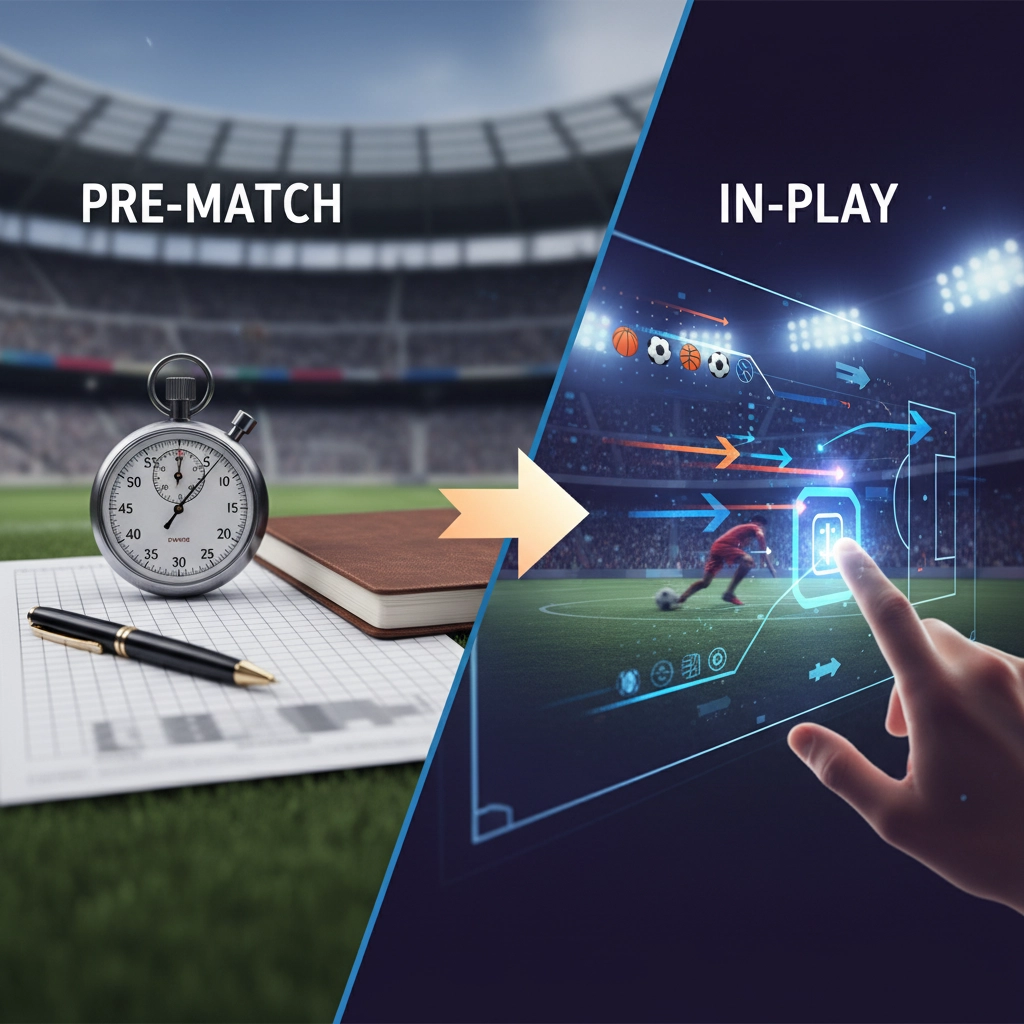
You already know the basics of pre-match betting: you study form, check markets, and place your stake before kickoff. In-play betting (also called live betting), however, lets you place new wagers after the event has started. That shift from static to dynamic markets transforms betting from a one-off prediction into an ongoing decision-making process. When you learn to read momentum, interpret live statistics, and act quickly, the game becomes both a viewing experience and a continually updated opportunity to find value.
In practical terms, pre-match bets are set against information available before the contest — injuries, historical form, weather forecasts, and bookmaker models. In contrast, in-play prices reflect the unfolding reality: who scored, which key player was substituted, or a sudden tactical change. For you, that means the market can overreact or underreact to events, and those mispricings are where value can be found. Live markets often feature shorter odds cycles, micro-markets (next goal, next corner), and more frequent cash-out options, giving you numerous tactical choices as the match progresses.
How in-play betting gives you actionable, tactical advantages
To make intelligent choices in real time, you rely on speed, pattern recognition, and selective restraint. In-play betting advantages tend to concentrate in a few practical areas where you can directly influence outcomes of your betting session:
- React to concrete events: You can wait for an early red card, an injury, or a clear momentum swing before committing. That reduces uncertainty compared with pre-match assumptions.
- Exploit shifting odds: Odds update continuously. If you spot a moment when the market has overadjusted — for example, an away team concedes a goal but remains dominant in chances — you can lock value that wasn’t present pre-match.
- Hedge and manage risk: In-play lets you hedge a pre-match position, secure partial wins via cash-out, or reduce exposure if the game turns against you.
- Use live data and broadcasts: Access to real-time stats (possession, expected goals, shot maps) and live video puts you ahead of slower market signals, enabling more informed, timely bets.
- Smaller, targeted markets: Micro-markets allow you to apply domain knowledge — like a striker’s finishing form or a team’s tendency to concede late — in ways that pre-match book totals can’t capture.
Those benefits don’t eliminate risk — in-play betting moves faster and can tempt impulsive decisions — but when you combine discipline with a plan, live wagering offers an array of strategic tools that pre-match alone cannot. In the next section, you’ll learn practical strategies, indicators, and tools you can use during a match to convert those advantages into consistent decision-making.
Practical in-play strategies you can execute now
Theoretical advantages matter only when you translate them into repeatable actions. Below are concrete tactics you can deploy during matches — each with a simple decision rule you can practice and refine.
– Scalping small edges: Pick a market with tight liquidity (match odds or next-goal). Back/lay small stakes to capture 2–5% moves when momentum briefly favors one side. Rule: enter when odds move at least 8–10% against the market trend and exit as soon as you lock 3–5% profit or when the game event (shot on target, set-piece) invalidates the move.
– Lay the draw / Bet the comeback: When an underdog starts strong (sustained pressure, high xG but no goal) and pre-match prices didn’t reflect that dominance, lay the draw or back the underdog at inflated odds. Rule: require at least three shots in the box or >0.25 xG for that team in a 10-minute window.
– Hedging pre-match exposure: If your pre-match selection scores early and odds collapse, hedge by laying the same outcome or taking a contrarian market (e.g., oppose an accumulator leg). Rule: set a target—lock at least 50% of theoretical profit if the hedge reduces downside significantly.
– Time-based over/under plays: Rather than betting total goals pre-match, target windows (first 20 minutes, final 15). If both teams are pressing and cumulative xG spikes in the first 15, switch to backing over for the next 10–15 minutes when odds are still favorable.
– Use micro-markets to exploit specialist knowledge: If you know a striker frequently scores after substitutions or a particular team concedes late, target “next scorer” or “goal in last 10 minutes” markets where bookmakers often misprice situational traits.
Each tactic needs clear entry and exit criteria. Practice with small stakes until you can act quickly without emotional interference.

Live indicators that reliably signal value
Not every stat matters. Focus on a handful that consistently precede meaningful odds shifts and outcomes.
– Expected Goals (xG) momentum: Short-term xG bursts (e.g., 0.2–0.4 xG within five minutes) often precede goals or a swing in control. Treat these as primary signals rather than single shots.
– Shot quality and location: Shots from inside the six-yard box or clear sightlines increase conversion probability dramatically. Two such attempts in quick succession are a stronger signal than several speculative long-range shots.
– Shot-to-target ratio and SOT trend: A team converting a high share of its shots to shots-on-target while the opponent’s SOT rate falls is demonstrating finishing and control advantages.
– Set-piece frequency and corners: Repeated corners in a short span indicate pressure that bookmakers may underweight in live lines, particularly later in matches.
– Tactical substitutions and formation shifts: A defensive substitution when chasing suggests team intent to protect a lead; an attacking sub when losing can shift your preferred markets (back goalscorer, team to score next).
Use these indicators in combination — two or more corroborating signals increase the probability of a profitable in-play decision.
Tools, setups, and bankroll rules for fast, disciplined action
Speed without structure is gambling; structure without speed is missed opportunity. Set up both.
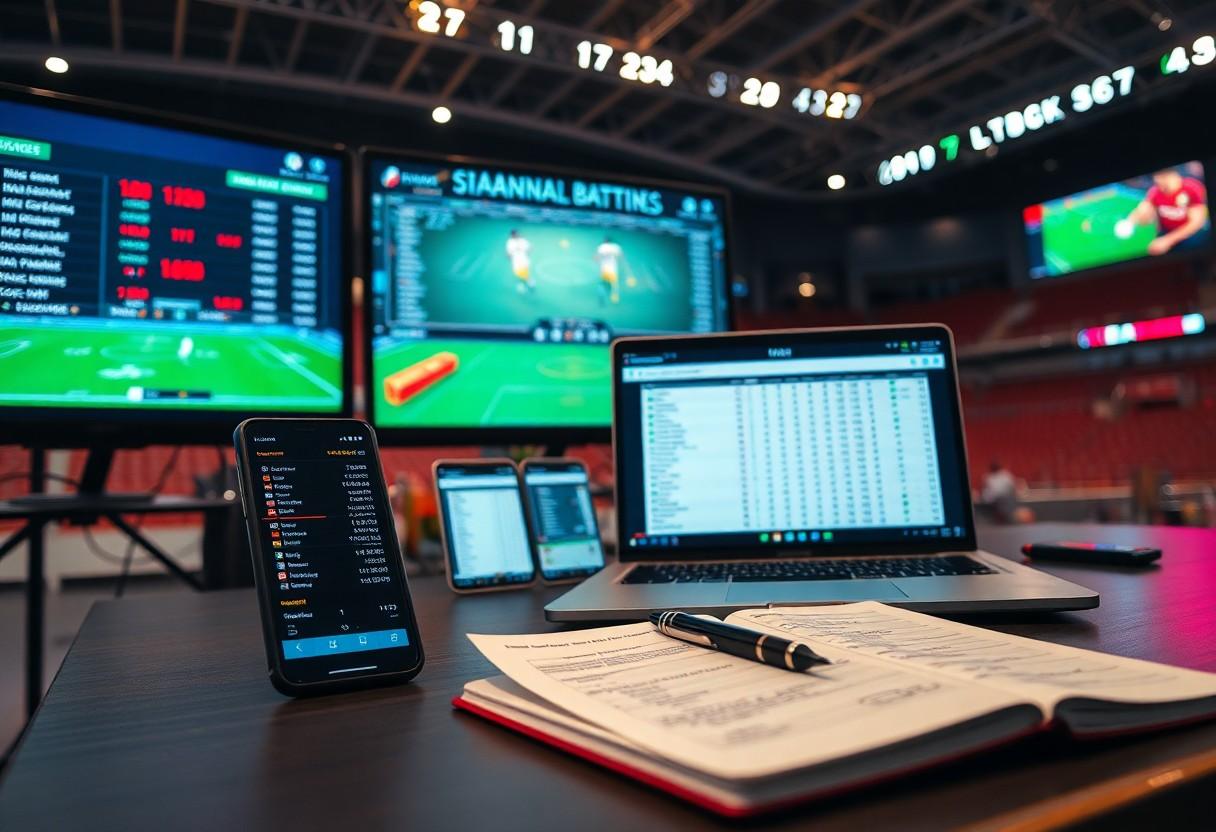
– Tech setup: Two screens minimum — one for the live stream/data feed, one for your betting interface. Use low-latency feeds and real-time stat providers; enable sound alerts for key events.
– Exchange vs. book: Exchanges let you lay and trade out positions; combine them with bookmaker prices for arbitrage or quick hedges.
– Staking discipline: Use a fixed percentage model for in-play (1–2% of bankroll per trade), and predefine loss limits per match and session. Stop trading once you hit either limit.
– Predefined rules and logs: Write simple checklists for each strategy (entry criteria, stake, exit), and log every trade. Reviewing mistakes is the fastest path to improvement.
– Emotional controls: Build a five-second rule before submitting any live bet; if you can’t justify the wager in one sentence, don’t place it.
Applied together, these practical systems turn the volatility of live markets into a controlled environment where skill — not impulse — drives results.
Before you dive into live markets, pick one or two of the practical tactics above and commit to practicing them with small stakes. Use your log to record entries, outcomes, and the signals you relied on. Over time, the combination of selective focus, disciplined staking, and a reliable tech setup will convert occasional wins into repeatable edge. For advanced live stats and xG visualizations, consider a real-time provider like StatsBomb to sharpen your read on momentum shifts.
Putting your live edge into play
Live betting rewards attention, preparation, and restraint more than boldness. Treat each match as a miniature experiment: test one hypothesis, measure the result, and iterate. Protect your bankroll first, seek small consistent edges second, and let learning compound faster than short-term variance.
Remember that rapid markets can both create and erase value within minutes. Your advantage comes from having clearer entry rules, superior data or positioning, and the discipline to walk away when conditions fall outside your plan. Over time, those habits — not big single wins — distinguish successful live bettors from recreational players.
Frequently Asked Questions
Is in-play betting inherently more profitable than pre-match betting?
No — in-play betting offers more tactical opportunities but also higher speed and emotional risk. Profitability depends on skill (reading momentum, using data), execution speed, disciplined staking, and access to low-latency feeds. For many bettors, combining selective pre-match positions with targeted in-play management is most effective.
What are the essential tools I need for effective live betting?
At minimum: a low-latency live stream or data feed, a fast betting interface (bookmaker or exchange), and a second screen or device for stats. Add a trusted real-time stats provider, predefined checklists for each strategy, and a logging system to review trades. These tools reduce slippage and decision noise.
How can I control emotions and avoid impulsive live bets?
Use fixed staking (1–2% per trade), enforce session loss limits, apply a brief decision pause (the five-second rule), and only trade setups that meet your written entry criteria. Logging every bet and reviewing mistakes regularly turns emotional impulses into disciplined habits.