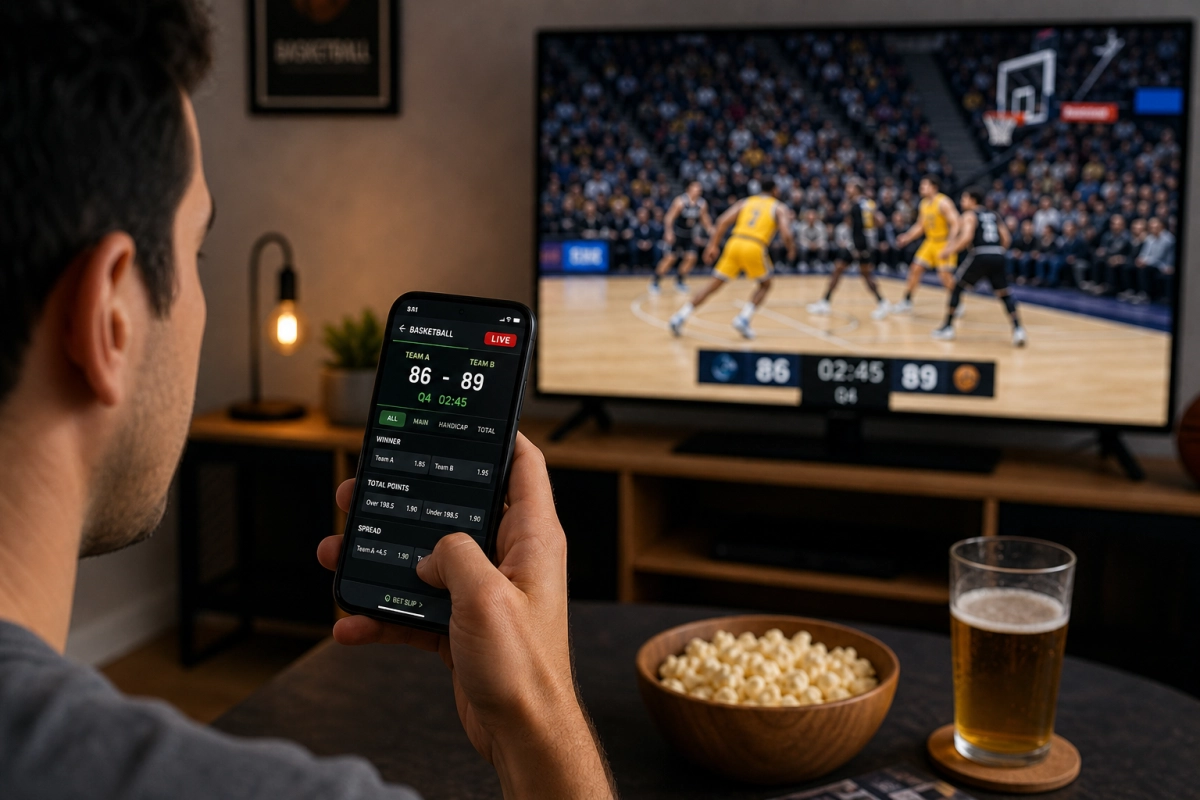

Why targeting creative World Cup prop bets can improve your payouts
When you focus only on match winners or tournament outright markets, you miss many inefficiencies that sportsbooks often overlook. Creative prop bets — those outside the mainstream like specific player actions, timing events, or niche in-game occurrences — can offer you larger payouts because they attract less sharp money and receive lighter analytical coverage. You can take advantage of this by learning how to identify value, size your stakes, and define scenarios where the market underprices an outcome.
As you prepare, remember that the World Cup is a compact, high-attention event where narratives, injuries, and rotation decisions shift quickly. You must be adaptable and combine qualitative insights (lineups, motivation, weather) with quantitative signals (player historical rates, team styles) to find edges. The goal is not to chase long odds blindly but to construct informed prop bets where the implied probability diverges from your model.
High-potential creative prop categories and why they pay more
Understanding where sportsbooks offer inflated prices is the first step. The following prop categories frequently produce higher payouts and are worth watching:
- Specific player events: shots on target, successful dribbles, defensive clearances. These are data-rich but under-bet compared with goals or cards.
- Timing/sequence props: which half a goal is scored in, or whether an event happens within a specified minute range. Timing uncertainty creates higher variance and larger odds.
- Combinations/mini parlays: pairing a low-correlated player action with a team outcome (e.g., player X to have 2+ shots AND team to win) often yields attractive returns when the events are loosely related.
- Tournament cumulative props: bets on total assists or bookings across group stage games — markets many casual bettors ignore between matches.
How to evaluate creative props so you don’t overpay for variance
Not all long odds are valuable. You should evaluate props through three lenses: probability modeling, margin assessment, and scenario analysis.
- Probability modeling: build quick, simple models using player rates (shots per 90, expected assists) and team context (possession share, chance creation). Convert those rates into probabilities for the prop.
- Margin assessment: compare your probability to the book’s implied probability. A useful rule: look for discrepancies of at least 5–8% on single props to justify taking on extra variance.
- Scenario analysis: list events that would drastically change the prop outcome (early substitution, red card, switch in tactics). If those scenarios are unlikely or you can hedge against them, the bet becomes more attractive.
Applying these practices will help you shift from speculative longshots to targeted, higher-value creative props. In the next part, you’ll get a practical walkthrough of building specific prop bets, including sample calculations and line-shopping techniques to lock in better payouts.
Practical walkthrough: constructing a sample prop and the quick math
Let’s build a concrete prop using a straightforward, repeatable method. Suppose you want to bet “Player A to record 2+ shots on target” in a group-stage match. Start with two inputs: the player’s raw rate (shots on target per 90) and the expected minutes he’ll play.
- Gather baseline rates: Player A averages 0.9 shots on target per 90 minutes across recent club and international minutes.
- Estimate minutes: manager rotation suggests he’ll play ~80 minutes (0.89 of a full match).
- Scale the rate: expected shots on target = 0.9 * 0.89 ≈ 0.80 for the match.
Translate that into a probability. A simple Poisson model is practical and conservative for count props: P(2+) = 1 − P(0) − P(1), where P(k) = e^(−λ) λ^k / k!. With λ = 0.80:
- P(0) = e^(−0.8) = 0.45
- P(1) = 0.45 * 0.8 = 0.36
- P(2+) = 1 − 0.45 − 0.36 = 0.19 (≈19%)
If the book offers +400 (~20% implied) that’s roughly fair; if it’s +500 (~17%), you’ve identified an approximate edge. Adjust the model for context: tougher opponent reduces λ, favorable tactics (high pressing, lots of wide play) increase it. Factor in match specifics—expected possession share, set-piece opportunities, and whether the player tends to target shots on goal rather than speculative attempts.
Line-shopping, timing, and where to find the best juice
After you build a probability, the next lever is finding the best price. Line-shopping across multiple sportsbooks and betting exchanges is the single most impactful discipline for prop bettors.
- Compare implied probabilities: convert odds to implied probability, include vig, and pick the highest posted price. Even a few percentage points difference matters on longer odds.
- Use exchanges and promos: exchanges sometimes show more efficient pricing than retail books; sign-up promos and free bet conversions can drastically improve expected value on single props.
- Time your bet: books often post lines early with conservative liability adjustments. If news (lineups, weather) favors your angle and the market hasn’t reacted, that’s the moment to strike. Conversely, be cautious of last-minute shifts that move value away.
Keep a simple tracking sheet: record your model probability, the best available price, and the margin. If your edge meets your threshold (e.g., +5–8% implied advantage), place the bet; otherwise, pass.
In-play adjustments and hedging for creative props
Creative props are ideal for live adjustments because partial information unfolds during a match. Monitor key triggers you identified in scenario analysis—substitutions, red cards, tactical shifts—and be ready to hedge or scale into the market.
- If Player A gets subbed off at 60′, recalc remaining λ and consider an opposite hedge on the market or a cash-out that locks profit/loss within acceptable bounds.
- When a red card increases attacking time for one side, consider adding correlated props (team shots or corners) that now have improved expected value.
- Don’t over-hedge: aim to reduce variance, not eliminate expected value unless the new information collapses your edge.
Using these practical calculations, disciplined line-shopping, and dynamic in-play management will let you systematically convert creative prop ideas into higher expected payouts rather than mere long-shot speculation.
Quick pre-bet checklist
- Confirm your model probability and required edge (e.g., ≥5–8%).
- Line-shop across books and exchanges; record the best posted price.
- Plan stake size relative to variance and bankroll rules; predefine maximum loss.
- Note key scenarios that would kill the edge (subs, red cards, tactical shifts) and a hedging trigger.
- Set live alerts for lineup and weather updates; use a reliable data source like FBref for rates and match logs.
- Log every prop bet: model input, price taken, result, and post-game adjustments for learning.
Final thoughts on hunting creative edges
Creative World Cup props reward preparation, discipline, and the willingness to act when a specific informational advantage appears. Keep your processes simple, track outcomes, and treat each prop as a testable idea rather than a lottery ticket. Over time, disciplined line-shopping, realistic modeling, and sensible in-play management separate profitable prop bettors from those chasing noise. Above all, protect your bankroll and bet responsibly — the best edges are the ones you can execute consistently.